By Barbara Cole
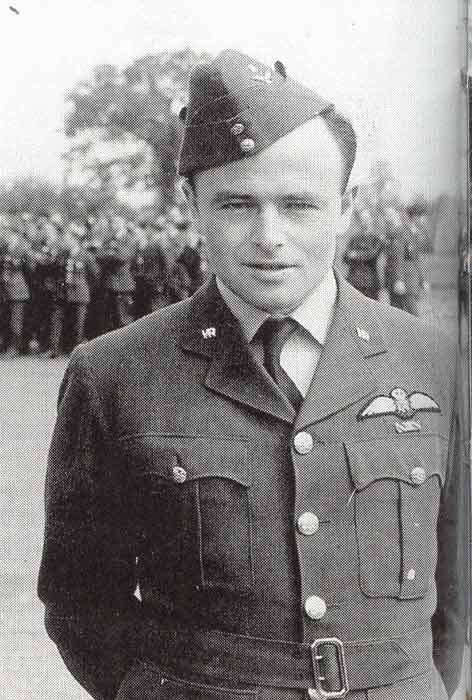
A Higham Ferrers-born wartime night fighter pilot who downed 15 enemy aircraft making him a triple ace, is to be permanently honoured in the town.
Edward Dixon Crew, Commander of the Order of the Bath, Distinguished Service Order (DSO) and Bar, and Distinguished Flying Cross (DFC) and Bar, who first saw action in the Battle of Britain and rose to great heights to become an RAF Air Vice Marshal, is to be immortalised with a Town Council Blue Plaque bearing his name.
With flags flying, Higham Ferrers will salute their hometown hero pilot at a special unveiling ceremony on September 14, during a weekend of Battle of Britain services across the country marking the 85th anniversary of the RAF’s historic series of victories against the German Luftwaffe.
Crew’s Blue Plaque will recognise him as “one of the few who defended our island home in its darkest hour.”
There is the possibility of a fly-past by an aircraft of the RAF Battle of Britain Memorial Flight from RAF Coningsby in Lincolnshire, weather permitting.
The Blue Plaque, sponsored by Mayor Gary Salmon and RAF friends, will go up at Crew’s birthplace, 12 Market Square, in the heart of the town.
The unveiling ceremony will follow a Battle of Britain service at St Mary’s Church and will be attended by local RAF Cadets, members of the RAF Association and other dignitaries.
Crew’s birthplace is now the home of Wilson Browne Solicitors, who as well as welcoming Crew’s Blue Plaque on their property, have sponsored the cost of an information board detailing the Air Vice Marshal’s impressive military career. A Wilson Browne partner, Sam Brett, will be in attendance on the day.
Although the town already has a series of Blue Plaques, no one knew about Crew’s birthplace until a local RAF friend of Mayor Gary Salmon, who had been researching the Battle of Britain, read about Crew’s birthplace and mentioned it along with a suggestion about honouring Crew with a Blue Plaque.
“The Town Council overwhelmingly agreed that our own Higham Ferrers night-time fighter pilot hero should be honoured with a Blue Plaque,” the Mayor recalled.
Crew’s son, Nigel who lives in Kent, has been tracked down and has been invited to unveil his father’s Blue Plaque.
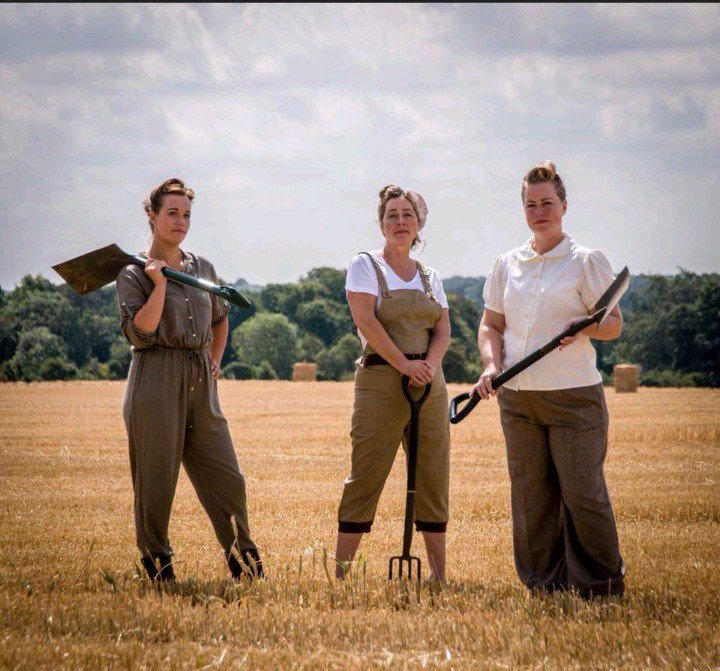
“Afterwards, there will be refreshments in the nearby Bede House, when The Candy Bars will entertain guests with 1940s wartime songs,” the Mayor said.
Wartime memorabilia will also be on display.
Various sources tell that Crew (1917-2002) was raised in Higham Ferrers by his stepfather, Sir Kenneth Murchison, a Conservative Member of Parliament. He was educated at Felsted School and Downing College, Cambridge, earning a Master of Arts in Anthropology and English Literature.
While at Cambridge, he joined the University Air Squadron which marked the beginning of his aviation career.
After training, he was posted to No 604 (County of Middlesex) Squadron in July 1940 at the height of the Battle of Britain.
His first confirmed aerial victory was on the night of 4/5 April, 1941, when he and his radar operator, Sgt Norman Guthrie, destroyed a Heinkel He 111 bomber. This success was followed by several others, including the destruction of additional He 111s and Junkers Ju 88s.
By July 1941, his continued success earned him the DFC for his outstanding ability and determination in engaging the enemy.
Then, the following year, he was awarded a Bar to his DFC after another eight night-time victories.
His leadership and skill were further recognised with his appointment as Flight Commander, when he continued to demonstrate exceptional prowess in night operations, contributing significantly to the RAF’s defensive efforts.
In 1943, he was promoted to commanding officer of No 96 Squadron and it was under his command that the squadron played a crucial role during the German’s V-1 pilotless flying bomb (Doodlebug) offensive of 1944, destroying 181 bombs, with Crew personally ccounting for 31.
It was during this time that Crew also downed 15 enemy aircraft, making him a triple ace.
His tactics and leadership during this phase earned him a DSO.
His distinguished Air Force career continued after the war and from 1948-1950, he commanded No 45 Squadron during the Malayan Emergency, leading anti-insurgency operations with Bristol Beaufighters and with his leadership recognised with a Bar to his DSO.
Crew also held several other key positions, including secondment to the Royal Canadian Air Force, command of RAF Bruggen in Germany and leadership of Air Forces Borneo during the Indonesia Malaysia confrontation.
The Candy Bar trio will entertain with songs from the 1940s.